ASCENT Conclave 2026 — In Focus
The Power of Collective
My takeaways from the Conclave
Two lines from ASCENT Conclave stayed with me long after the sessions ended. Don’t shrink the opportunity to fit your circumstance — expand your circumstance to fit the opportunity. And if it gets hard, just survive; thriving will follow.
“When opportunity knocks and circumstances are not in your favour, don’t reject the opportunity. Pause, and evaluate every option to make it a reality.”
— Arundhati Bhattacharya, President & CEO, Salesforce South Asia. Don’t shrink the opportunity to fit your circumstance; expand your circumstance to fit the opportunity.
Shiv Shivakumar
Operating Partner, Advent International
When startups grow up — 9 mistakes they make
A veteran operator who has led Nokia India, PepsiCo India and the Aditya Birla Group, Shiv Shivakumar gave a brutally honest session — no theory, just what kills scale.
Listen to the session
Key learnings
- 1Not writing down the values. If it isn’t written, it isn’t real — values can’t live in the founder’s head; they must be on the wall and in the appraisal.
- 2Using values as slogans. “Integrity, Innovation” on a poster that nobody lives. Ask: what behaviour gets rewarded or punished tomorrow morning because of this value?
- 3Hiring for speed, not fit. In the scale phase you hire CVs because you need hands and ignore culture fit — that one hire costs 10x later.
- 4Tolerating brilliant jerks. The toxic star performer founders protect for the numbers quietly kills ten good people.
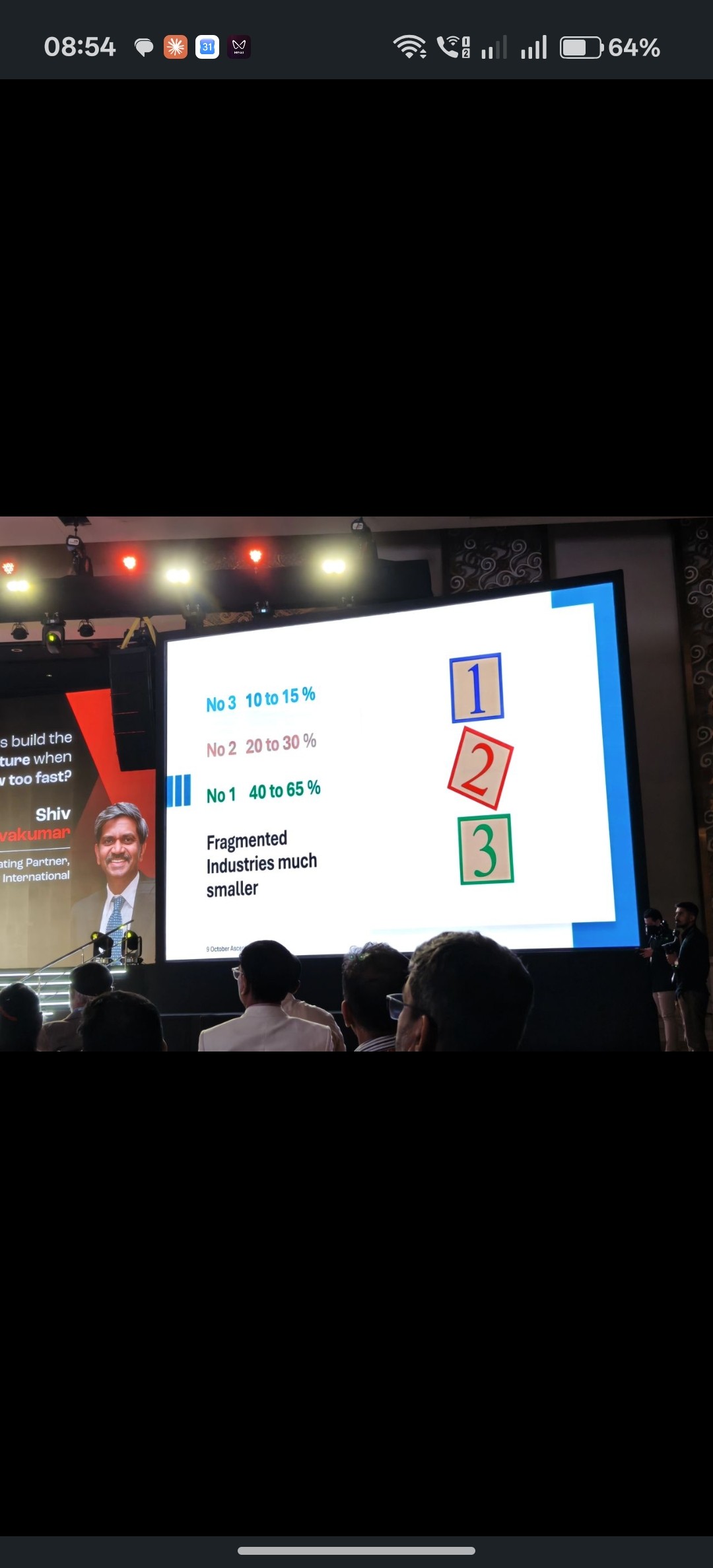
- 5When the founder becomes the bottleneck. From 19 to 270 people, if every decision still comes to you, you aren’t scaling — you’re choking.
- 6Losing transparency and governance. Early on everyone knows everything; as you grow you start hiding numbers. That is the start of the end.
- 7Copying big-company bureaucracy. At 200 people you import a process built for 20,000 and kill the speed that was your only moat.
- 8Glorifying overwork. If “we work 18 hours” is your badge of honour, you won’t attract grown-ups. Scale needs adults, not martyrs.
- 9HQ or access culture. The day you build a corner office people need permission to enter, you’ve built a bureaucracy, not a company.
In summary
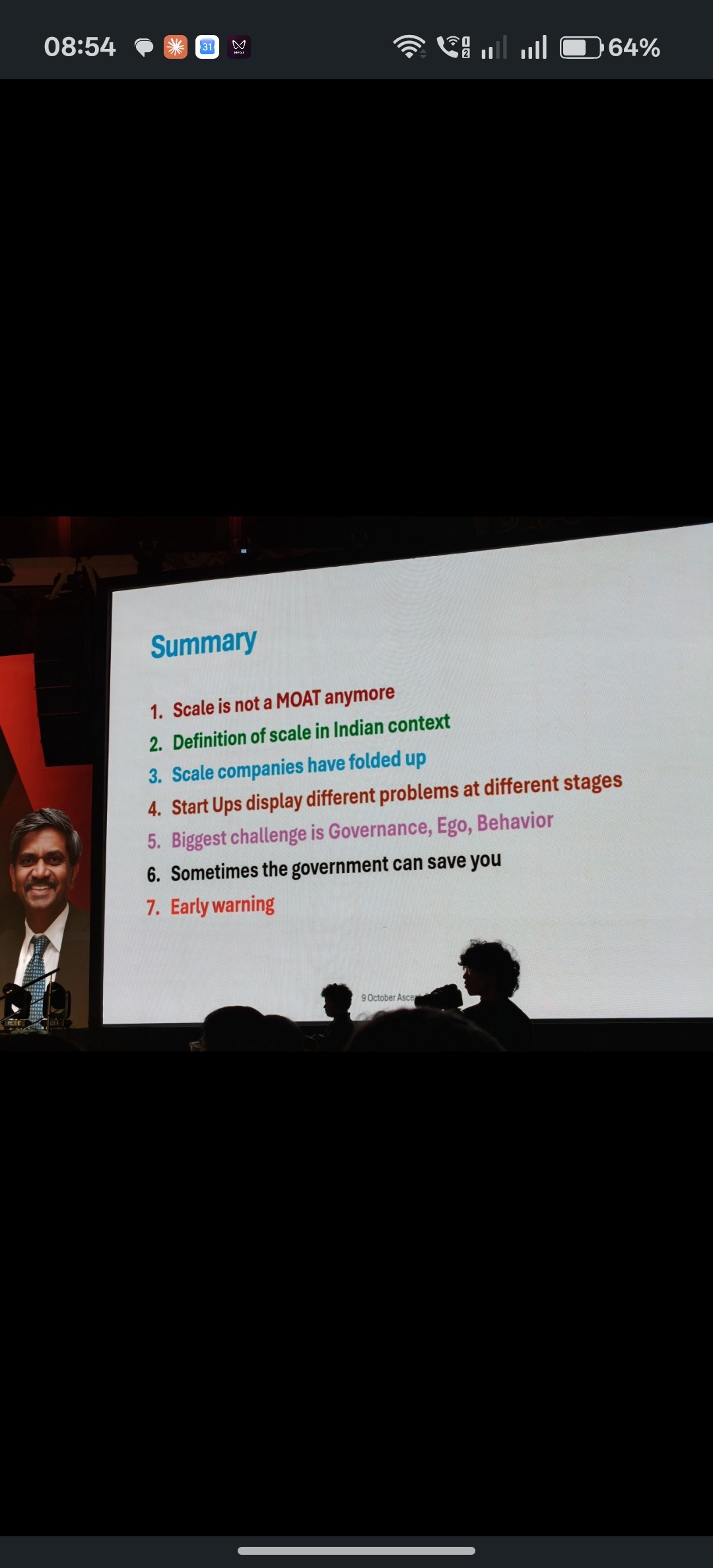
Scale is not a moat anymore — anyone can scale with capital. The real challenges are Governance, Ego and Behaviour. Big companies have folded and startups show different diseases at different stages, but the virus is always the same: the founder’s ego.
Vijay Shekhar Sharma
Founder & CEO, Paytm
On resilience — surviving when the business tests everything you believe in
From a small-town beginning to building one of India’s most recognised fintech brands, Vijay Shekhar Sharma spoke candidly about the highs, the lows, the difficult decisions and the resilience it took to keep going.
Listen to the session
“Resilience is not always about thriving. Sometimes it’s just about surviving. Look back at the distance you’ve already travelled — and what is in front of you starts to feel small.”
Key learnings
- 1Resilience is not a personality trait. It is a commitment.
- 2Never confuse a falling stock price with the worth of the people who built the business.
- 3Profitability is not just a financial metric — it is freedom. Cash in the bank buys options: to survive longer, to invest when others retreat, to decide without desperation.
- 4Never underestimate the power of your support system — family, trusted advisers and the people he called his Krishna.
- 5If you are the founder, be the last person to switch off the lights. A founder’s job isn’t to create confidence in good times, but to help the organisation find its footing when confidence is shaken — and through it all, look after your health, because no milestone is worth losing the person building it.
Dr. Ram Charan
Global Business Advisor
Timeless principles for owners who want to grow
Advisor to some of the world’s most successful CEOs and boards, Dr. Ram Charan distilled decades of practice into clear, practical lessons any business owner can act on.
Listen to the session
Key learnings
- 1Don’t write job descriptions — write scorecards. Not what the person will do, but what they must deliver: three measurable outcomes, clear enough for a 10th-standard student.
- 2Hire for spikes, not balance. Like a sports coach — what is this person naturally great at, and does that spike fit the role? Strengths first, weaknesses later.
- 3You can’t create time — you have to manufacture it. Take one big decision you still own, train someone, test them, and hand it over. Then the next. Scale is about letting go.
- 4If your HR head can’t recruit well, you have the wrong HR head. Their real job isn’t policy — it’s getting A-players in.
- 5Don’t be scared of giants. Your real competitor isn’t their chairman in a boardroom — it’s a hungry manager three levels down. Small can beat big if it moves faster.
- 6Capital has memory. It follows a track record. Deliver what you promised, do it ethically, and if you miss, have an honest, believable reason. Trust is the real balance sheet.
- 7Back to basics, always — delivery, service, quality, new products. And teach every person how the company makes money, in language a street vendor would understand.
- 8One thing to do tomorrow morning: go and get the team that will drive your business to growth.
Moments from the Conclave