
Hindustan Aeronautics Limited
Forty Years of Borrowed Blueprints, Then a Fighter India Built Itself
THE MOMENT
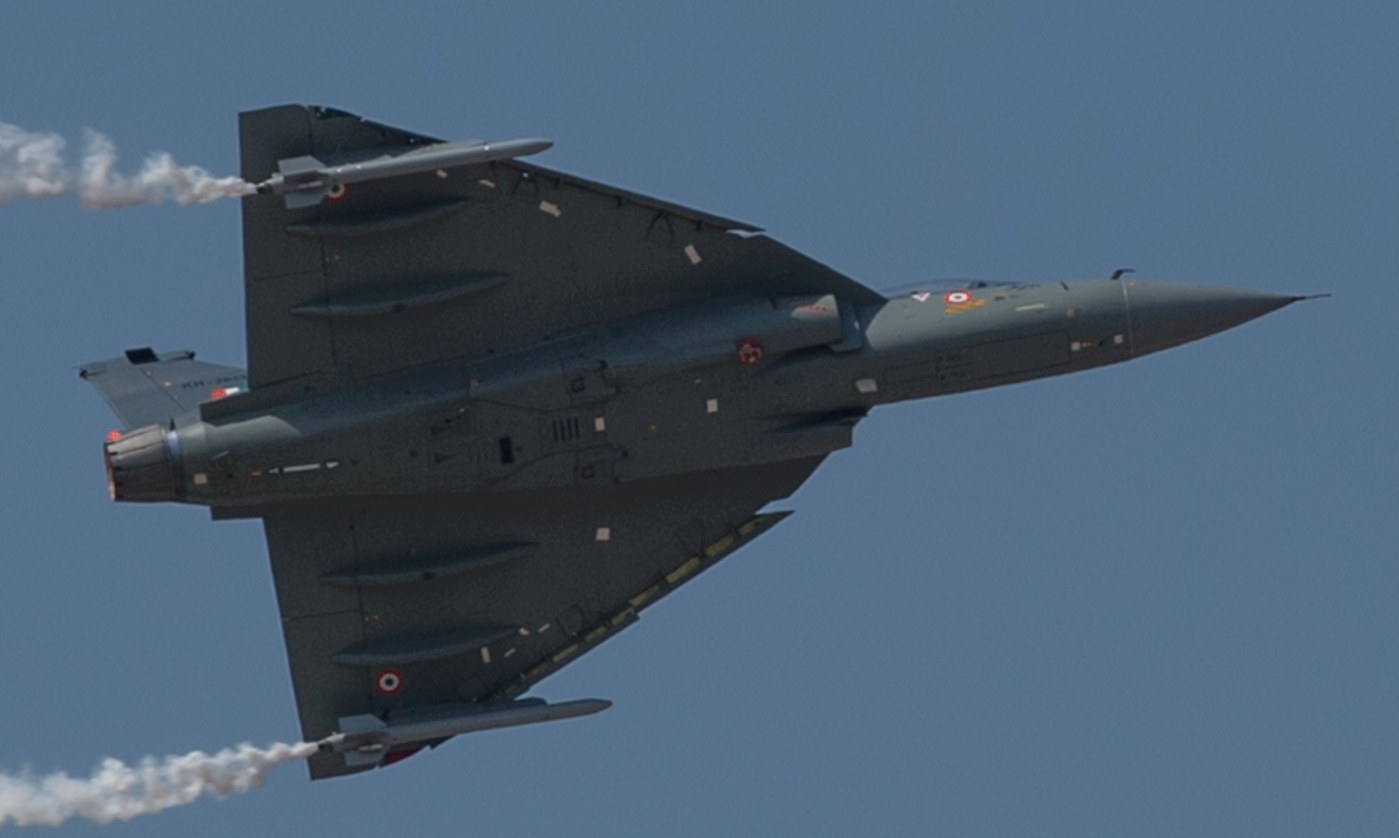
October 17, 2025. Nashik, Maharashtra. Defence Minister Rajnath Singh watches India's first Light Combat Aircraft built at the Nashik facility take to the sky. It is a Tejas Mk1A — a 4.5-generation multirole fighter jet, designed in India, built in India, carrying Indian weapons. Singh calls it a shining symbol of India's growing Aatmanirbharta in defence.
Forty-two years have passed since Prime Minister Indira Gandhi sanctioned the LCA programme in 1983. Forty-two years of false starts, missed deadlines, technology embargoes, engine import dependency, and persistent scepticism from the very Indian Air Force that would eventually fly the aircraft. And yet the plane is real. The production line is real. The 1,000 jobs created at Nashik are real.
The Turnaround at a Glance
Hindustan Aeronautics Limited
Timeline
1940
HAL founded in Bangalore by Walchand Hirachand; India's first aircraft manufacturer
1964
HAL Nashik established for licensed manufacture of MiG-21 fighter jets from USSR
1983
LCA programme sanctioned under PM Indira Gandhi; HAL chosen as principal contractor
2001
Tejas Technology Demonstrator achieves first flight — 18 years after programme start
2016
Tejas Mk1 achieves Initial Operational Clearance; IAF begins induction
2021
MOD signs ₹48,000 crore contract for 83 Tejas Mk1A jets — largest indigenous defence contract in history
Before → After
Indigenous Fighters Designed
Tejas Production Capacity
Active Orders
Private Suppliers (LCA)
The Playbook Move
MOVE 1 — FACE THE TRUTH
HAL faced the truth that India could not be a sovereign military power without indigenous fighter aircraft — and committed to the LCA programme for 40 years despite delays, embargoes, and scepticism, until the truth became a flying machine.
“LCA Tejas Mk1 is not merely a fighter aircraft. It is a statement of India's design and manufacturing excellence — conceived, developed and produced indigenously through the collaboration of HAL, ADA, DRDO and the Indian Air Force.”
— Sanjeev Kumar, Secretary, Defence Production, Government of India
THE COMPANY BEFORE
HAL was founded in 1940 by Walchand Hirachand in Bangalore, making it one of the oldest aircraft manufacturers in Asia. For most of its history, HAL was not a designer of aircraft — it was a licensed manufacturer. MiG-21s from the Soviet Union. Jaguar SEPECAT from the Anglo-French programme. Hawk trainers from British Aerospace. Sukhoi Su-30MKIs from Russia. The formula was fixed: negotiate a technology licence, transfer the manufacturing drawings, train the workers, assemble the aircraft in India.
This was not without value. HAL built extraordinary manufacturing capability over five decades. Its Nashik division alone produced and overhauled over 2,000 military aircraft. But designing an aircraft from scratch — from aerodynamics to avionics, from flight control systems to weapons integration — was a different order of capability entirely. India had not attempted it since Independence.
THE CRISIS
By the late 1980s, the Indian Air Force's MiG-21 fleet was ageing. India depended on the Soviet Union for nearly all its front-line fighter aircraft. When the Soviet Union collapsed in 1991, that dependency suddenly felt dangerous. Spare parts dried up. Maintenance contracts became uncertain. India needed a domestic fighter capability — not just a licensed assembly line, but a genuine design-and-build capability.
The LCA programme, which had begun in 1983, became the vehicle for that capability. But progress was agonisingly slow. The programme definition phase began in October 1986. The technology demonstrator did not fly until 2001 — 15 years later. Along the way, US technology embargoes after the 1998 Pokhran nuclear tests blocked access to critical avionics and engine technology. The domestically developed Kaveri engine fell short of required thrust. Delays compounded. Costs escalated. The IAF, watching its fleet decline in numbers, grew openly sceptical of HAL's ability to deliver.
THE LEADERSHIP DECISION
The truth that HAL and India's defence establishment had to face was uncomfortable: building a world-class fighter jet from scratch was going to take far longer and cost far more than anyone had publicly admitted. The choice in the early 2000s was either to abandon the programme and purchase more foreign jets, or to commit to completing it — with foreign interim solutions to fill the immediate gap.
India chose to commit. The IAF accepted interim Mirage 2000 and Su-30MKI purchases to maintain its combat strength while Tejas development continued. HAL accepted foreign AESA radar from Israel (EL/M-2052) and the GE F404 engine for Mk1A, rather than insisting on full indigenisation immediately. The decision to accept 62% indigenous content in Tejas Mk1A — rather than waiting for 100% — was the decision that made the programme real. Perfection was deferred. A flying aircraft was not.
The second decision was production expansion. When the MOD signed the ₹48,000 crore contract for 83 Mk1A jets in February 2021, HAL committed to building new production lines at Bengaluru and Nashik. The third production line at Nashik — completed in record time of two years, with 30+ assembly jigs covering all major modules — gave HAL the capacity to produce 24 Tejas per year.
THE STRATEGIC PIVOT
HAL's strategic pivot was from manufacturer to integrator. The difference is profound. A manufacturer executes someone else's design. An integrator owns the design, manages the supply chain, coordinates hundreds of sub-system suppliers, and takes responsibility for the final product's performance in combat.
With Tejas, HAL became India's first genuine aircraft integrator. The LCA programme generated capabilities that did not exist in India before: fly-by-wire flight control systems (developed in-house), carbon fibre composite structures, glass cockpit integration, and the Autolay software for composite manufacturing — later licensed to Airbus for the A380 programme.
The Tejas Mk2 and AMCA (Advanced Medium Combat Aircraft) programmes build on this foundation. Mk2 targets 70-82% indigenous content. AMCA, a 5th-generation stealth fighter, is entirely an Indian design. The private sector is being systematically inducted into the supply chain: over 410 private suppliers contributed to Tejas Mk1A, versus 344 for Mk1. HAL is evolving from a monopoly PSU manufacturer into the integrator at the centre of an Indian aerospace ecosystem.
MARKET REACTION
The IAF's initial scepticism was well-documented. For years, the IAF insisted Tejas was underpowered and under-capable for front-line combat. The IAF's own test pilots pushed for higher performance parameters that repeatedly shifted the development target. The first IAF squadron to operate Tejas — No. 45 Squadron 'Flying Daggers' — did so with some reluctance.
Operation Sindoor in 2025 changed the narrative. HAL's 24-hour operational support at multiple operational sites — including installation of BrahMos missiles on Su-30MKI jets — demonstrated that HAL's manufacturing and maintenance capability was combat-ready. Defence Minister Singh publicly credited HAL for its role in the operation's success.
THE FACTORY FLOOR
HAL's Nashik Division has been transformed. From a facility that built MiG-21s under Soviet blueprints in 1964, it now operates three Tejas Mk1A production lines and the second production line for the Hindustan Turbo Trainer-40 — HAL's first entirely indigenous turboprop trainer. The facility is paperless, fully digital, and certified sustainable.
The Industrial Design Centre at HAL Bengaluru integrates R&D with manufacturing in a single campus. The Tejas production system — with its 30+ assembly jigs covering fuselage, wings, and air intakes — is designed for 8 aircraft per line per year. With three lines running, HAL will produce 24 Tejas annually, fulfilling the ₹48,000 crore Mk1A order by the early 2030s and beginning work on the ₹66,000 crore second order for 97 jets.
THE RESULTS
THE PLAYBOOK MOVE
PLAYBOOK MOVE 1 — FACE THE TRUTH: HAL faced the truth that India could not be a sovereign military power without indigenous fighter aircraft — and committed to the LCA programme for 40 years despite delays, embargoes, and scepticism, until the truth became a flying machine.
THE LESSON
The 40-Year Programme
HAL and the Tejas programme teach the most difficult manufacturing lesson: some capabilities cannot be rushed, bought, or borrowed. Designing a combat aircraft requires the simultaneous mastery of aerodynamics, materials science, avionics, propulsion, and systems integration — and the only way to build that mastery is to build the aircraft. India spent 40 years stumbling toward that mastery. The stumbling was not failure. It was the price of learning. Any country — or company — that insists on perfect indigenisation before starting will never start.
Your organisation has relied on external technology for decades. What would it take to own the design — and would you accept twenty years of imperfect progress to get there?