
THE MOMENT
The advertisement made grown men cry.
'Hamara Bajaj' — Our Bajaj. The jingle had been playing since 1989, and it had done something that few pieces of commercial communication in Indian history have ever achieved: it had fused a product with a national identity. The Chetak scooter was not just a vehicle. It was the sound of the Indian middle class arriving. It was the vehicle in which fathers brought their new brides home. It was the machine that appeared in the background of ten thousand family photographs. To own a Bajaj Chetak was to have made it in India.
Rajiv Bajaj knows all of this. He grew up with this brand. It is part of his family's identity as much as it is part of India's. And in the late 1990s, sitting with sales data that shows motorcycles overtaking scooters for the first time in Indian history, he arrives at a conclusion that is professionally clear and personally agonising.
The Chetak has to go.
Not eventually. Not gradually. Gone — discontinued, mourned, and replaced by a company that is no longer a scooter manufacturer but a motorcycle specialist. The identity that built Bajaj Auto must be killed so that Bajaj Auto can survive.
What follows is one of the most difficult corporate identity transformations in Indian business history — and one of the most instructive.
The Turnaround at a Glance
Bajaj Auto
Timeline
1945
Bajaj Auto founded. Begins importing and selling Vespa scooters
1972
Chetak launched. Becomes India's most beloved two-wheeler
1986
Tie-up with Kawasaki to enter motorcycle segment — limited success
1994
Liberalisation bites. Bajaj slides from #1 to #4 in two-wheelers
1999
Motorcycles overtake scooters in India for the first time ever
2001
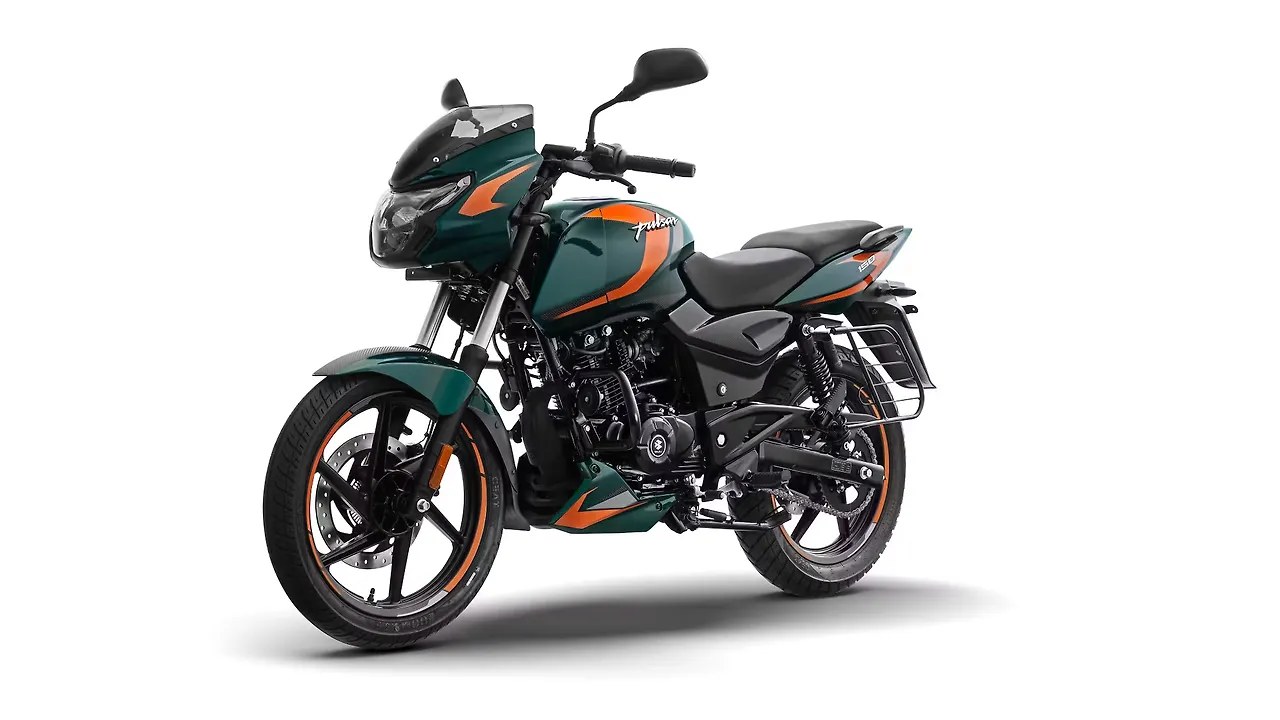
Pulsar launched in 150cc and 180cc. First 3 months: dismissed as failure
Before → After
Market Position
Pulsar Sales
EBITDA Margin
Export Revenue
The Playbook Move
Move 2 — CUT TO THE CORE
Bajaj Auto's turnaround is the clearest illustration of Playbook Move 2 in this book. The company had to decide, with genuine honesty, what it actually was at its best — and then cut everything else, however beloved, however emotionally painful.
“Brands are never built on a diffused strategy. Companies that have kept their brands sharper are the ones who are profitable.”
— Rajiv Bajaj, Managing Director, Bajaj Auto
THE COMPANY BEFORE
Bajaj Auto began in 1945, selling imported Vespa scooters under licence. By 1972, it had launched its own product — the Chetak — and within a decade the Chetak had become the defining vehicle of middle-class India. In the 1980s, Bajaj was the undisputed king of Indian two-wheelers. The waiting list for a Chetak stretched for months. Dealers collected money upfront and delivered when stock arrived. Customers had no choice and no complaints.
The company's market position was formidable. By the mid-1980s, Bajaj held over 35% of the Indian two-wheeler market. Its scooters were synonymous with the category. The liberalisation of 1991 changed the competitive landscape, but slowly. What changed it faster was something more fundamental: Indian consumer preferences. As disposable incomes rose, as roads improved, as younger buyers entered the market, the geared scooter began to feel dated. It was practical, reliable, and entirely of the past.
Bajaj had been in a motorcycle collaboration with Kawasaki since 1986 — producing the KB100 series — but motorcycles were only 10% of the business in 1996, and the attitude within the company reflected this: the motorcycle division was treated as secondary, under-resourced, the afterthought of a scooter company that did not yet believe it needed to change.
That attitude was about to become an existential problem.
THE CRISIS
By the late 1990s, the numbers were telling a story that no one inside Bajaj wanted to read.
In 1999, for the first time in Indian two-wheeler history, motorcycles outsold scooters. It was not a temporary aberration. It was a structural shift driven by fuel efficiency, changing road conditions, younger buyer demographics, and the arrival of Hero Honda's Splendour — a 100cc motorcycle that became the best-selling vehicle in Indian history.
Bajaj Auto, which had been the number one two-wheeler company in India, slid to number four. Behind Hero Honda, Yamaha, and TVS. The company that had defined the Indian two-wheeler market for decades was now watching from the wrong side of a trend it had been slow to recognise and slower to respond to.
The motorcycle division's problems were not merely strategic — they were operational. Bajaj's motorcycle manufacturing cost was high. Product quality was below Hero Honda's standard. The Caliber, the Boxer, successive Kawasaki derivatives — each failed to generate the excitement needed to challenge Hero Honda in the 100cc commuter segment. The Kawasaki partnership ended, leaving the motorcycle division without a technical partner at the worst possible moment.
Meanwhile, Honda launched the Activa gearless scooter in 2001. It was everything the Chetak was not — light, automatic, refined, modern. Within months, the Activa was doing to Bajaj's scooters what the motorcycle shift had not quite finished: making them look irrelevant. The iconic Chetak, which had once had a months-long waiting list, was being sold at discounts. The Kristal, a last-minute Bajaj response in the gearless scooter segment, failed completely.
Some stock market analysts thought the structural decline had already gone too far to reverse. Neither group, at that point, was betting confidently on recovery.
THE LEADERSHIP DECISION
Rajiv Bajaj returned from business school in the United States to find a company losing its identity at the same pace it was losing its market share. His father Rahul Bajaj had built Bajaj Auto on the Chetak's dominance. That dominance was gone. The question Rajiv faced was whether to fight to recover it, or to make the most difficult decision available: accept that the scooter era was over and rebuild entirely around motorcycles.
The internal resistance to this conclusion was fierce. Bajaj Auto's entire organisational identity — its engineering expertise, vendor relationships, marketing heritage, emotional self-image — was built around scooters. To say that scooters were no longer the future was a declaration that the thing the company knew how to do best was no longer worth doing.
Rajiv Bajaj said it anyway.
His strategic logic was clean. The 100cc motorcycle market was Hero Honda's territory — Splendour and Passion were deeply embedded. Fighting Hero Honda head-to-head in its strongest segment with an inferior product was a losing proposition. The opportunity lay in a segment that did not yet exist at scale: a performance motorcycle. Something for the rider who wanted more than commuter utility — who wanted power, style, and identity.
The Pulsar project was built on this insight. A team of fifteen people who had never built a motorcycle before, working without Kawasaki, targeting a 180cc performance segment when the company could not yet reliably produce a competitive 100cc bike. Rajiv Bajaj personally supervised details from styling to paint to the spark plug specification. After 24-30 months of development, the Pulsar was launched in November 2001.
For the first three months, it appeared to be another failure. Dealers reported slow uptake. Early buyers were mocked. 'You have brought a failure model,' their friends said. 'The CBZ rules.'
Then something changed.
THE STRATEGIC PIVOT
The strategic pivot at Bajaj was a sequence of three decisions, each reinforcing the others.
First: the Pulsar itself. The decision to compete not where Hero Honda was strong, but where it had not gone. The Pulsar 180cc positioned itself as 'Definitely Male' — a tagline that, combined with displacement no competitor was then offering at that price, created a genuinely new category. Not a better commuter. A performance motorcycle for urban India at a price a salaried professional could afford.
Second: the exit from scooters. The Chetak was discontinued in 2005. The Kristal was stopped in 2009. Rajiv Bajaj's argument was precise: companies with sharper focus generate more profits. Every resource divided between scooters and motorcycles was a resource not fully committed to motorcycle excellence.
Third: vendor rationalisation. Bajaj had over 1,000 suppliers at the peak of its scooter business. Rajiv cut this to approximately 200 — retaining only those capable of meeting the quality and precision the Pulsar required. This was brutal for long-standing suppliers. It was essential for the product.
The DTSi technology — Digital Twin Spark ignition, two spark plugs per cylinder for more complete combustion — gave the Pulsar a technical identity no competitor could immediately replicate. It became the engineering story the marketing wrapped around: not a styled-up commuter, but a technically differentiated performance machine, made in India, by Indian engineers given a mandate to build something genuinely new.
MARKET REACTION
The Pulsar's first three months were quiet enough that sceptics felt vindicated. Consumers were not immediately convinced that Bajaj — a scooter company — could be trusted in the performance motorcycle space. The brand baggage of 'Hamara Bajaj' was real: warm, beloved, and entirely associated with the segment Bajaj was trying to leave behind.
What changed the trajectory was word of mouth. Early owners who had bought despite the lukewarm reception were riding a motorcycle that genuinely performed differently from anything else at the price. The twin spark technology, the 180cc engine, the instrument cluster — details Rajiv Bajaj had personally supervised — added up to a riding experience commuter motorcycles were not designed to deliver.
By early 2002, waiting periods for the Pulsar 180 were emerging in major cities. By April 2012, Bajaj had sold more than 5 million Pulsars. The motorcycle everyone had called a failure in its first three months had become the most successful performance motorcycle brand in Indian history.
Hero Honda, watching Bajaj's success in a segment it had not prioritised, was forced to recalibrate. The competitive dynamics of the Indian two-wheeler market had shifted permanently.
THE FACTORY FLOOR
The factory floor transformation at Bajaj Auto was as significant as the strategic one — and far less discussed.
The vendor rationalisation from 1,000 to 200 suppliers was not merely a cost exercise. It was a quality exercise. Suppliers who remained were those willing to invest in manufacturing precision the Pulsar required. Bajaj worked with them directly — providing technical specifications, quality standards, and in some cases investment support — to build a supply chain capable of producing components to tolerances the scooter business had never demanded.
Inside the Chakan plant near Pune, assembly lines were reorganised around motorcycle production. Engine assembly, in particular, required precision that Bajaj's workforce had not previously been required to apply consistently. The DTSi technology demanded new manufacturing capabilities: modified combustion chambers, new calibration tools, quality controls at every stage.
Export preparation added a further layer of manufacturing discipline. The Bajaj Boxer — a rugged, stripped-down motorcycle — became a significant export product in Africa, Latin America, and South Asia. These markets demanded durability standards even more rigorous than the Indian market. By 2014, Bajaj was the top motorcycle exporter from India, with exports contributing over 35% of revenue — a buffer against domestic fluctuations that no purely domestic two-wheeler manufacturer could match.
The factory that had been built for scooter volumes had been rebuilt, methodically, into a precision motorcycle manufacturing facility. The product change required the operational change. Neither would have worked without the other.
THE RESULTS
The financial outcome of Bajaj's transformation is most clearly visible in the margin comparison. While Hero Honda competed on volumes in the 100cc commuter segment — high volume, lower margins — Bajaj had repositioned itself in the premium performance segment where pricing power was significantly greater. By 2014, Bajaj's net profit was 53% higher than Hero MotoCorp's, despite Hero selling considerably more vehicles by volume.
It was the precise validation of Rajiv Bajaj's thesis: sharper focus generates more profit than broader volume.
THE PLAYBOOK MOVE
Playbook Move 2 — CUT TO THE CORE
Bajaj Auto's turnaround is the clearest illustration of Playbook Move 2 in this book. The company had to decide, with genuine honesty, what it actually was at its best — and then cut everything else, however beloved, however emotionally painful.
The core, when Rajiv Bajaj examined it without the distortion of legacy, was not scooters. It was two-wheeler engineering capability. That capability could be redirected. The scooter application of it could not be saved. Cutting the scooter business was not an exit from manufacturing — it was a liberation of manufacturing capability from a category that could no longer reward it.
Every factory owner will face a version of this decision. The product that built the business. The customer relationship that feels impossible to walk away from. The brand heritage that seems to define the company. When the evidence says the category is declining and resources required to defend it are starving the future — the answer Bajaj gives is clear: cut to the core, back what you are actually best at, and build from there with full focus.
THE LESSON
The brand that built your company can become the cage that traps it. The courage to bury what you are most loved for — when the evidence demands it — is the rarest and most necessary form of leadership.
Bajaj Auto's turnaround is often told as a story of product brilliance — the Pulsar, the DTSi technology, the performance positioning. These are real. But the deeper story is about identity.
Rajiv Bajaj did not just launch a new motorcycle. He dismantled an entire corporate self-image — the scooter company, the Hamara Bajaj brand, the manufacturing identity, the vendor relationships, the emotional legacy — and rebuilt the company around a different self-image. A motorcycle specialist. A performance brand. A global exporter.
The most dangerous asset in Indian manufacturing is a beloved product in a declining category. The love is real. The category decline is also real. The companies that survive this combination are the ones willing to honour the legacy by letting it go — and building something new that carries the capability forward, even if it does not carry the name.
What product, customer, or business line is your company defending out of loyalty to the past rather than conviction about the future — and what would become possible if you stopped defending it?