
Eicher Motors / Royal Enfield
The 26-Year-Old Who Asked for Two Years to Save a Dying Legend
THE MOMENT
It is 2000. Vikram Lal, founder and CEO of Eicher Motors, is preparing to shut down Royal Enfield.
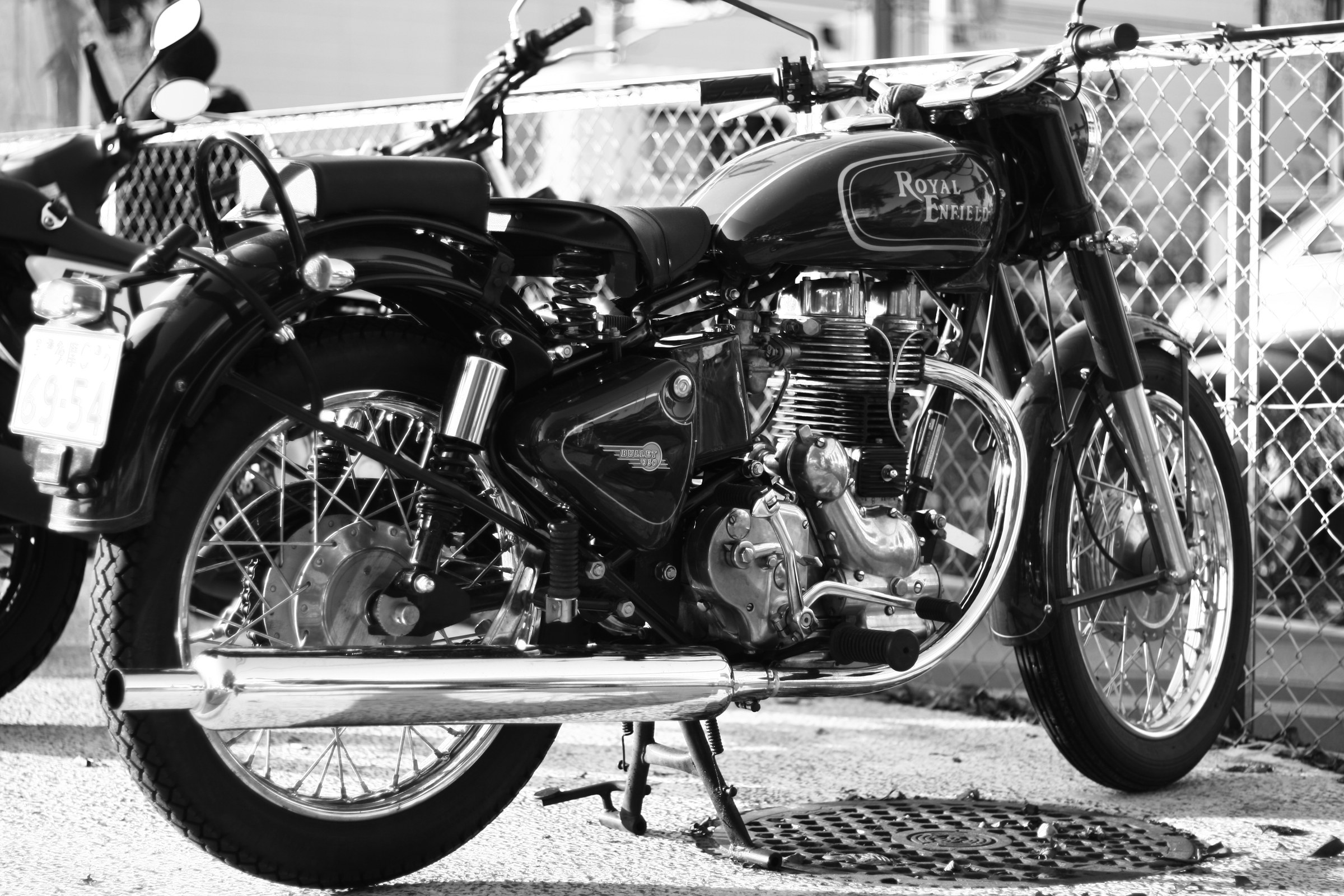
The numbers justify it. The Royal Enfield factory in Chennai is producing 2,000 motorcycles per month against a capacity of 6,000. The brand's reputation — still powerful among its devoted loyalists — is being undermined by chronic reliability issues. Engines leaked oil. Electrical systems were unpredictable. The Bullet, Royal Enfield's flagship, was simultaneously the most beloved and the most unreliable motorcycle in India. Owners joked that the oil stain under a parked Enfield was proof it still had oil left.
The financials were clear. The division was losing money. The board had run the numbers. The recommendation was to close.
Then Siddhartha Lal — Vikram's son, 26 years old, recently returned from automotive engineering studies in England — walked into his father's office and asked for two years.
Not a business plan. Not a consulting report. Just two years, and the chance to try. Vikram Lal agreed — not, as Siddhartha would later acknowledge with characteristic candour, out of confidence in his son, but because the business was doing badly enough that nothing seemed worse than the trajectory it was already on.
What happened in those two years — and the twenty-five that followed — produced one of the most remarkable brand rescues in the history of the motorcycle industry.
The Turnaround at a Glance
Eicher Motors / Royal Enfield
Timeline
1901
Royal Enfield manufactures its first motorcycle in Redditch, England
1955
Indian Army orders 800 Bullets. Manufacturing begins in Madras
1970
British Royal Enfield ceases production. India becomes the sole surviving factory
1993
Eicher Motors acquires majority stake in Enfield India Ltd
1994
Losses mount. Sales ~2,000 units/month against 6,000 capacity. Board considers closure
2000
Siddhartha Lal, age 26, appointed CEO. Given two years to turn it around
Before → After
Annual Sales
Monthly production
Business lines (Eicher)
Market cap (Eicher Motors)
The Playbook Move
Move 2 — CUT TO THE CORE
Royal Enfield's turnaround is a textbook illustration of Playbook Move 2 applied at the brand level. Siddhartha Lal cut to the core of what Royal Enfield genuinely was — a cult motorcycle brand for experiential riders — and then organised everything around serving that core identity with total commitment.
“The board agreed to give me a chance — not because of confidence in me, but because the business was doing so badly it could hardly get any worse. I'll take that.”
— Siddhartha Lal, Executive Chairman, Eicher Motors
THE COMPANY BEFORE
Royal Enfield's history is, by any measure, extraordinary. The brand was founded in 1901 in Redditch, England. Its Bullet motorcycle, launched in 1932, became one of the longest-surviving motorcycle designs in history. The Indian connection began in 1955 when the Indian Army ordered 800 Bullets for border patrol — an order that made the case for domestic manufacturing and led to the establishment of an assembly facility in Madras.
By 1970, the British motorcycle industry had been destroyed by Japanese competition. Honda, Yamaha, Kawasaki, and Suzuki had systematically taken market share from Triumph, BSA, Norton, and Royal Enfield with faster, cheaper, more reliable machines. British Royal Enfield ceased production. The Indian factory, however, survived — serving a domestic market that, insulated by import restrictions and genuinely affectionate toward the Bullet's distinctive character, continued to buy.
When Eicher Motors acquired a majority stake in Enfield India in 1993, it acquired a brand with powerful emotional assets — the Bullet's thump, its military heritage, its association with the open road — and serious operational liabilities. The manufacturing processes were old. The quality systems were weak. The dealer network was thin. The product lineup was essentially unchanged since the 1950s.
The Eicher acquisition brought fresh capital and management attention, but not, initially, the strategic clarity to exploit Royal Enfield's true potential. Sales grew modestly through the mid-1990s, then plateaued. By 2000, the division had consumed more capital than it had generated, and the board's patience had run out.
THE CRISIS
The crisis of 2000 was a crisis of identity as much as finance. Royal Enfield was trying to be two things simultaneously — a practical motorcycle for middle-class buyers, and a cult object for adventurous riders — and succeeding at neither. The Bullet was more expensive than Hero Honda's entry-level bikes and less reliable. It was aspirational for some buyers but alienated others by its unpredictability.
The reliability problem was both real and symbolic. An oil leak under a Bullet was a standing joke. Electrical gremlins were expected. The engine's famous 'thump' — the distinctive sound that loyal owners loved — was partly an artefact of low technology that, in a more competitive market, would be a disqualifier rather than a differentiator. Younger buyers were increasingly choosing Hero Honda and Bajaj products that started reliably every morning and didn't require mechanical sympathy to operate.
The operational crisis compounded the brand one. Factory capacity utilisation was below 35%. The supply chain was fragmented. The quality assurance systems were inadequate for the level of consistency the market was beginning to demand. The engineering team was underfunded and under-resourced, operating without the tools to develop new products at the pace the market required.
Eicher's board looked at these numbers in 2000 and reached a rational conclusion: Royal Enfield was not a viable business. The capital could be better deployed elsewhere. The brand, with its small but devoted following, might be sold to a buyer who could make something of it — or it might simply be allowed to end with dignity.
THE LEADERSHIP DECISION
Siddhartha Lal's first decision — the one that made everything else possible — was to be ruthlessly honest about what Royal Enfield was and was not. It was not a mass-market motorcycle brand. It was not going to compete with Hero Honda on fuel efficiency, or with Bajaj on price, or with TVS on technology. Any strategy that tried to make Royal Enfield into those things would fail, because the brand's authentic identity — heavy, classic, characterful, slightly demanding — was the opposite of what those brands offered.
What Royal Enfield was, authentically, was a lifestyle product. A motorcycle for people who wanted an experience, not just transportation. A machine that rewarded the rider who understood it, that connected its rider to a sense of adventure and open road that modern, efficient, anonymous motorcycles could not provide. Siddhartha had grown up with this understanding — his engineering education and his personal passion for riding had given him an intuitive grasp of what the brand's loyal owners loved and why.
The second decision was focus. Eicher Motors in 2000 operated in 15 different business lines, including tractors, components, engineering tools, and automotive consultancy. None of these businesses had the scale or the margins of the core motorcycle and truck operations. Siddhartha, once he became managing director in 2006, made the brutal but necessary decision to exit 13 of them, concentrating Eicher's capital, management attention, and engineering talent on Royal Enfield motorcycles and commercial vehicles.
The third decision was quality before volume. Instead of rushing new models to market to rebuild sales, Siddhartha focused the engineering team on fixing what existed — eliminating the oil leaks, improving the electrical systems, making the Bullet a motorcycle that delivered the experience it promised, reliably, every time. This was unglamorous work. It produced no press releases. But it rebuilt the trust of the dealer network and the existing owner community, whose word-of-mouth was the brand's most powerful marketing tool.
THE STRATEGIC PIVOT
The Royal Enfield pivot was from commodity manufacturer to cult brand — from a company that made motorcycles to one that curated a lifestyle, a community, and an identity. This distinction, which sounds like marketing language, had profound operational implications.
The product strategy was the most visible expression of the pivot. The Bullet Electra, launched in 2001, retained the classic aesthetic but incorporated modern engineering — electric start, improved reliability. The Classic 500, launched in 2008, was the breakthrough: a motorcycle that looked unmistakably like an Enfield from any decade since the 1950s but performed to modern standards of reliability and refinement. It told buyers that they could have the Enfield experience they had always wanted without the frustrations that had previously accompanied it.
The community strategy was equally deliberate. Royal Enfield invested in rider events — the Himalayan Odyssey, Rider Mania — that brought owners together, created shared experiences, and deepened the emotional connection between the brand and its customers. These were not marketing events with product placements. They were genuine community gatherings that Royal Enfield facilitated because its leadership understood that the brand's value was not in the motorcycle alone but in what the motorcycle enabled: adventure, freedom, belonging.
The dealer network was expanded systematically — from a handful of outlets to over 1,000 across India. In each new city and town, the dealership was not just a sales point but a community hub, a place where owners gathered, compared rides, and reinforced each other's identity as Royal Enfield riders. Siddhartha understood that he was not selling motorcycles. He was inducting people into a community.
MARKET REACTION
The market's reaction to the Royal Enfield turnaround was, initially, confined to the existing owner community. The Classic 500's launch in 2008 produced enthusiastic reviews among motorcycling journalists and immediate demand among buyers who had been waiting for a Royal Enfield they could trust. Sales went from 50,000 units annually in 2010 to nearly 600,000 in 2014 — a tenfold increase in four years.
This growth was impossible to ignore in the broader automotive market. Hero Honda — which had long dismissed Royal Enfield as a niche curiosity — found itself watching a competitor grow into the dominant player in the 250-500cc motorcycle segment. No other Indian manufacturer had a credible product in this segment. No multinational had positioned itself to serve Indian buyers who wanted an experiential motorcycle at an accessible price.
The financial markets were equally responsive. Eicher Motors' stock became one of the best-performing equities in India through 2012-2016, as the compounding growth of Royal Enfield revenue and profitability became apparent. Investors who had written off Eicher as a struggling commercial vehicle company revalued it as one of India's most profitable and fastest-growing consumer brands.
International reactions added a dimension of global validation. European and American motorcyclists, accustomed to paying premium prices for Italian or British heritage motorcycles, discovered that Royal Enfield offered a comparable experiential identity at a fraction of the price. Export volumes, initially tiny, began growing as the international motorcycling community recognised what Indian buyers had already found.
THE FACTORY FLOOR
The manufacturing turnaround at Royal Enfield's Chennai plant was the foundation of everything else. Siddhartha Lal spent his first years working out of Chennai, understanding the production process from the inside and systematically addressing the quality failures that had defined the brand's reputation.
The oil leak problem — Royal Enfield's most famous and most damaging reliability issue — was an engineering problem that required systematic investigation of every gasket, seal, and casting tolerance in the engine. The fix was not glamorous. It required engineering attention, supplier development, and quality control discipline at each stage of assembly. But when the oil leaks stopped, the customer experience transformed. Riders who had previously accepted leaks as an Enfield character trait discovered they now had a motorcycle that performed as reliably as any Japanese competitor.
When the Oragadam plant near Chennai was commissioned to meet the surge in demand after 2010, it was built with manufacturing systems that reflected the quality standards Siddhartha had spent a decade establishing. The new plant could produce motorcycles at volumes the old facility could never support while maintaining the quality that the brand's premium positioning required.
The R&D investment — including the establishment of a technology centre in Leicestershire, England, near the original Royal Enfield site — brought together Indian and British engineers who worked together on platforms like the 650 Twin engine and the Himalayan adventure motorcycle. These products were not simply updated versions of existing models. They represented a genuine expansion of the brand's engineering capability into segments and technologies that the old Royal Enfield had never addressed.
THE RESULTS
The Royal Enfield story generates a number that is worth pausing on: a tenfold increase in sales in four years, sustained over more than a decade. Most product turnarounds produce a recovery to previous levels. Royal Enfield's turnaround produced something categorically different — the creation of a new market category and the capture of its dominant position.
The ₹1 lakh crore valuation of Eicher Motors represents the capitalised value of two decisions: Siddhartha Lal's request for two years, and his father's willingness to grant it.
THE PLAYBOOK MOVE
Playbook Move 2 — CUT TO THE CORE
Royal Enfield's turnaround is a textbook illustration of Playbook Move 2 applied at the brand level. Siddhartha Lal cut to the core of what Royal Enfield genuinely was — a cult motorcycle brand for experiential riders — and then organised everything around serving that core identity with total commitment.
The exit from 13 of Eicher's 15 business lines was the operational expression of cutting to the core. Every rupee of capital, every hour of management attention, every engineering talent was focused on two businesses. Within those two, Royal Enfield received the focused investment of a company that had decided this was what it was for.
The lesson from Playbook Move 2 is that cutting is an act of courage. Eicher's board had looked at 15 businesses and seen diversification as safety. Siddhartha looked at 15 businesses and saw 13 distractions. The courage to make that distinction — and to act on it — was the single most important strategic decision of the turnaround.
THE LESSON
A brand's authentic identity — what it genuinely is, not what management wishes it were — is its most valuable and most fragile asset. Protecting and amplifying that identity is a more powerful strategy than trying to be something the brand was never meant to be.
The temptation Siddhartha Lal resisted — to modernise Royal Enfield into a more conventional, more efficient, more mainstream motorcycle — would have destroyed the brand. The loyal customers who bought Enfields despite their reliability problems were not buying a motorcycle. They were buying an identity, an experience, a membership in a community of people who valued a particular relationship with the open road.
Improving quality, expanding the dealer network, and investing in the community — these were the decisions that amplified the brand's authentic identity. Trying to compete with Hero Honda on fuel economy, or with TVS on technology, would have undermined it.
The lesson for manufacturers: before you decide what to change, spend time understanding what you must not change. The features of your product that seem like weaknesses to outsiders may be exactly the features that your most loyal customers value most.
What is the authentic core of your manufacturing brand — not what you wish it were, but what your most loyal customers actually love — and are you protecting it or diluting it?