
TVS Motor Company
The Three-Month Silence That Built the Deming Prize
THE MOMENT
It is 1990. The TVS factory in Hosur, Tamil Nadu has been closed for three months.
Workers are home. The assembly lines are silent. The factory gates are locked. From the outside, TVS Motor Company looks like a casualty — a two-wheeler manufacturer that could not survive the competitive pressure of Hero Honda and Kawasaki Bajaj and Escorts Yamaha. India's liberalising economy was drawing Japanese motorcycle technology into joint venture after joint venture, and TVS, despite its own Suzuki partnership, was being squeezed.
Inside the closed factory, however, something else was happening. Venu Srinivasan, who had become managing director of the holding company Sundaram-Clayton at the age of 25, was using the shutdown as a reset — a radical, deliberate pause to address the labour conflicts, the quality failures, and the operational weaknesses that had made the factory uncompetitive. He had brought in Total Quality Management experts. He was redesigning processes. He was upgrading machinery. He was training the workforce for a different standard of manufacturing.
Three months of silence. And then, when the factory reopened, a different company emerged.
The Deming Prize — the most rigorous quality award in the world, awarded to Sundaram-Clayton in 1998 and to TVS Motor itself in 2002, making it the first two-wheeler company globally to win the prize — was the formal validation of what Venu Srinivasan had built during that quiet, uncomfortable, expensive three months in 1990.
The Turnaround at a Glance
TVS Motor Company
Timeline
1911
T.V. Sundaram Iyengar starts Madurai's first motorised bus service — TVS Group is born
1980
TVS 50 launched — India's first two-seater moped. Hosur plant, Tamil Nadu
1984
Joint venture with Suzuki. First 100cc motorcycle. Renamed TVS-Suzuki Ltd
1989
Commercial motorcycle production begins. Faces intense Hero Honda competition
1990
Factory closes for three months. Venu Srinivasan uses shutdown for TQM overhaul
1996
TVS XL and Champ become India's largest-selling vehicles. Catalytic converter pioneer
Before → After
Quality recognition
Factory workforce productivity
Annual sales
Export markets
The Playbook Move
Move 5 — FIX THE FACTORY FLOOR
TVS Motor Company is the most literal example of Playbook Move 5 in this book. Venu Srinivasan did not fix the market problem, the product problem, or the competitive problem first. He fixed the factory floor. Everything else followed from that.
“Quality is not a department. It is a value. And values are not installed by announcement. They are installed by practice, every single day, until the practice becomes instinct.”
— Venu Srinivasan, Chairman, TVS Motor Company
THE COMPANY BEFORE
The TVS Group's history stretches back to 1911, when T.V. Sundaram Iyengar started Madurai's first motorised bus service. By the time Sundaram-Clayton entered the two-wheeler business in the late 1970s, the group was a diversified transportation and auto-components enterprise with deep roots in Tamil Nadu's industrial ecosystem.
The Hosur moped plant, commissioned in 1976, launched the TVS 50 in 1980 — India's first two-seater moped. The product was a genuine innovation for its time: more capable and durable than the competition, designed for the heavy utilitarian use that Indian road conditions and Indian buyers demanded. By the mid-1980s, TVS 50 had sold over one million units — a remarkable achievement for a brand-new product category.
The Suzuki joint venture, formalised in 1987, brought Japanese engineering technology to the TVS platform and launched commercial motorcycle production in 1989. On paper, the partnership gave TVS access to Suzuki's proven technology, quality systems, and model development expertise. In practice, the joint venture created a structural dependency: TVS was building motorcycles to Suzuki specifications, using Suzuki technology, with Suzuki's engineers having veto power over key product decisions.
This dependency was sustainable in a protected market. In a competitive one, where Hero Honda was combining Honda's engineering efficiency with Hero Group's distribution strength to build an apparently unassailable position, TVS needed more than a technology partner. It needed its own identity and its own capability.
THE CRISIS
The late 1980s brought TVS to the edge of collapse through a combination of competitive pressure and internal dysfunction. Hero Honda had entered the market in 1985 with a fuel efficiency advantage — 'Fill it, Shut it, Forget it' became one of Indian advertising's most powerful slogans — that TVS could not immediately match. Kawasaki Bajaj and Escorts Yamaha were capturing market share with their own Japanese technology partnerships.
The factory floor crisis was as serious as the market one. Labour conflicts had been building through the late 1980s — disputes over wages, working conditions, and management style that produced the industrial relations tension typical of manufacturing companies in that era. Productivity was below potential. Quality was inconsistent. The relationship between management and workforce had deteriorated to the point where normal operational improvement was impossible.
Venu Srinivasan's diagnosis of the crisis was clear: TVS could not fix its market position without fixing its factory. And it could not fix its factory without addressing the fundamental relationship between management intent and operational reality. The labour conflict was not, at its root, a dispute about wages. It was a dispute about how the factory would be run and who would have ownership of quality.
The decision to shut the factory for three months was unpopular, expensive, and unprecedented. It meant lost revenue, uncertain customer relationships, and workers who went home with no guarantee of what they would return to. It was, as Venu Srinivasan would later acknowledge, a decision made from a position of weakness — the company was struggling badly enough that the shutdown was a calculated risk rather than a position of strength.
THE LEADERSHIP DECISION
Venu Srinivasan's leadership decisions during and after the shutdown were shaped by a conviction he had carried since his first visit to Japan in the mid-1980s: that Total Quality Management was not a programme but a culture, and that culture had to be built at the level of the individual worker's relationship to their work.
In Japan, Srinivasan had seen factories where workers stopped production lines when they found defects — a practice that would have been unthinkable in Indian manufacturing of that era, where stoppages meant lost output and therefore punishment. He had seen quality circles where workers met voluntarily to solve production problems. He had seen management systems where data, not hierarchy, drove decisions.
The TQM implementation during the shutdown was comprehensive. Machine upgrades were accompanied by process redesigns. Process redesigns were accompanied by training. Training was accompanied by a fundamental renegotiation of the relationship between management and workforce: TVS would invest in its workers' capability, and in return, the workers would take ownership of quality outcomes. Not as a slogan. As a daily operating reality.
The second decision — to break from Suzuki in 2001 and build TVS's own four-stroke motorcycle technology — was the logical endpoint of Srinivasan's quality journey. As long as TVS depended on Suzuki for technology, its quality ceiling was defined by the partner. Independence meant building your own capability, accepting the risk of failure, and owning the results entirely. TVS Victor, launched in 2001 as India's first fully indigenous motorcycle, was the product of that bet.
THE STRATEGIC PIVOT
The pivot from Suzuki-dependent joint venture manufacturer to independent quality-first motorcycle company happened on two timelines simultaneously: the operational transformation of the factory, and the strategic separation from the joint venture.
On the factory floor, TQM implementation produced results that were visible within years. Defect rates fell. Customer complaints dropped. Warranty claims reduced. The Deming Prize process — which requires a multi-year external audit of quality management systems across the entire organisation — became the framework for continuous improvement. Sundaram-Clayton's brakes division won the prize in 1998. TVS Motor itself won in 2002 — the first two-wheeler company anywhere in the world to achieve this recognition.
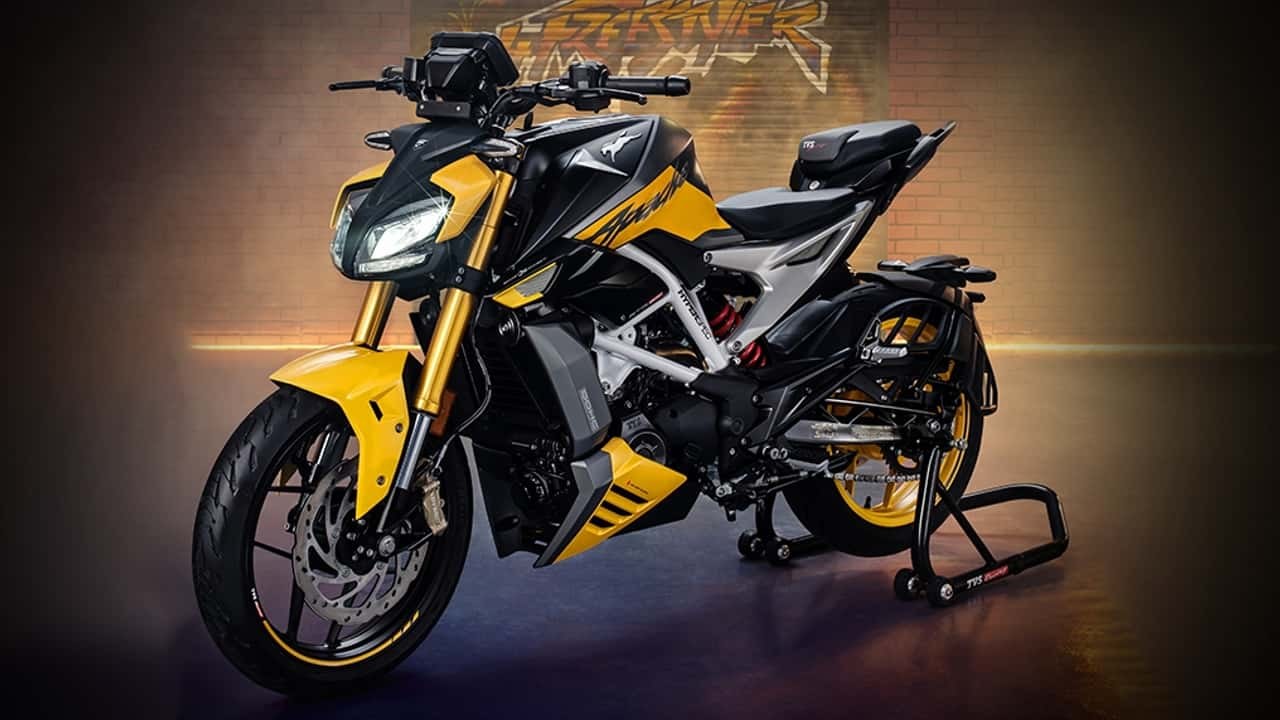
The product strategy pivot was equally significant. Free from Suzuki's product control, TVS moved aggressively into segments it had not previously served. The Apache 150, launched in 2005, was a performance motorcycle that directly competed with Hero Honda's higher-end offerings — a product that was not just competent but genuinely aspirational, with racing-derived engineering and an identity that younger buyers wanted. The Apache became TVS's most iconic product and the foundation of its premium strategy.
The scooter segment — particularly the TVS Scooty range, which had pioneered accessible scootering for Indian women — was upgraded and extended to maintain market leadership. The Jupiter, launched subsequently, expanded TVS's scooter presence into the mainstream family segment. Each product decision was grounded in the deep understanding of Indian riding conditions, Indian maintenance practices, and Indian buyer priorities that TVS had developed over four decades in Hosur.
MARKET REACTION
The market's reaction to TVS's independence from Suzuki was sceptical. Hero Honda dominated India's motorcycle market in 2001 with a scale, fuel efficiency reputation, and distribution network that seemed impossible to challenge without Japanese technology backing. The conventional wisdom was that TVS had made a strategic mistake by separating from Suzuki, and that it would struggle to develop competitive products independently.
The TVS Victor's launch in 2001 as India's first fully indigenous motorcycle partially addressed this scepticism. The bike was technically sound and commercially viable. But it was the Apache, four years later, that transformed the market's perception of TVS as a brand. The Apache demonstrated that TVS could build a motorcycle that was not just competitive but distinctive — a product with an engineering identity that was entirely its own.
The Deming Prize wins were the most powerful market communication tool TVS possessed. In a market where customers could not directly evaluate the quality of a motorcycle's internal systems, the Deming Prize — an internationally recognised external validation of quality management — became a credibility signal that no competitor could dismiss. It told dealers, riders, and fleet buyers that TVS's commitment to quality was not marketing. It was institutional.
THE FACTORY FLOOR
The Hosur facility, where TVS 50 was first assembled in 1980, is today one of the most quality-certified manufacturing operations in the Indian two-wheeler industry. The TQM culture that Venu Srinivasan installed in 1990 has been compounded over three decades into a set of practices and habits that run through every level of the organisation.
Quality circles — small groups of workers who meet regularly to identify, analyse, and solve problems in their work areas — operate actively at Hosur and the Mysuru plant commissioned in 1998. This is not a compliance exercise. Workers who have grown up in the TVS TQM culture genuinely take ownership of quality outcomes in their areas, because the training and the management system have made that ownership feel real and rewarding.
The statistical process control systems at TVS's engine assembly operations are among the most rigorous in the Indian two-wheeler industry. Every critical dimension is measured and recorded. Every deviation from specification triggers an investigation. The data systems that track defects and their root causes are shared with suppliers through a vendor development programme that extends TVS's quality standards into the supply chain.
The BMW collaboration, which produced the Apache RR 310 — a co-developed, globally competitive performance motorcycle with a 312cc engine — demonstrated that TVS's engineering and manufacturing capability had reached a level where a premium European motorcycle brand was comfortable co-developing a product. That is a quality endorsement that no advertising campaign could purchase.
THE RESULTS
TVS Motor Company's transformation from a struggling joint venture manufacturer to the world's first Deming Prize-winning two-wheeler company is, at its core, a quality story. Everything else — the market share, the product portfolio, the BMW partnership, the global exports — is downstream of the three months in 1990 when Venu Srinivasan locked the factory gates and decided to build a different kind of company.
THE PLAYBOOK MOVE
Playbook Move 5 — FIX THE FACTORY FLOOR
TVS Motor Company is the most literal example of Playbook Move 5 in this book. Venu Srinivasan did not fix the market problem, the product problem, or the competitive problem first. He fixed the factory floor. Everything else followed from that.
The sequence matters. TVS could have responded to competitive pressure by cutting prices, launching new models, or seeking a new technology partner. All of these responses would have addressed the symptoms without addressing the cause. The cause was a factory that could not produce at the quality level required to compete — not because the workers were incapable, but because the systems, training, and culture had not been built.
Playbook Move 5 is not about investing in machines. It is about investing in the factory's capacity for continuous improvement — the organisational capability to get better, systematically, every day. The Deming Prize is not awarded for one-time quality achievements. It is awarded to companies that have built systems for never-ending quality improvement. TVS built those systems. The Deming Prize was the certificate. The 3 million annual units at world-class quality were the proof.
THE LESSON
Sometimes you have to stop producing in order to become capable of producing better. The shutdown that looks like failure is the precondition for the transformation that looks like success.
The TVS story is about the courage to stop. In manufacturing, stopping production is the most visible form of failure — customers wait, revenue disappears, competitors gain ground. Every instinct in a manufacturing organisation argues against a voluntary shutdown.
Venu Srinivasan shut the factory anyway. Not because he had no other options, but because he understood that the options that preserved short-term production would not preserve long-term competitiveness. The factory as it was in 1990 could not become a Deming Prize winner. The factory it needed to become required a fundamental reset — of processes, machines, training, and most importantly, of the relationship between management and workforce.
For Indian manufacturers considering transformation: the most important question is not 'Can we afford to stop?' It is 'Can we afford not to?' The TVS answer — a Deming Prize, BMW collaboration, and 3 million units annually — suggests that voluntary stopping, when necessary, is one of the highest-return investments a manufacturing leader can make.
If you closed your factory for three months today and used the time to build the quality culture you actually want, what would you change — and why haven't you changed it without closing?